A Manager’s Perspective: Lile’s Story
Georgia
- Children
- Disability
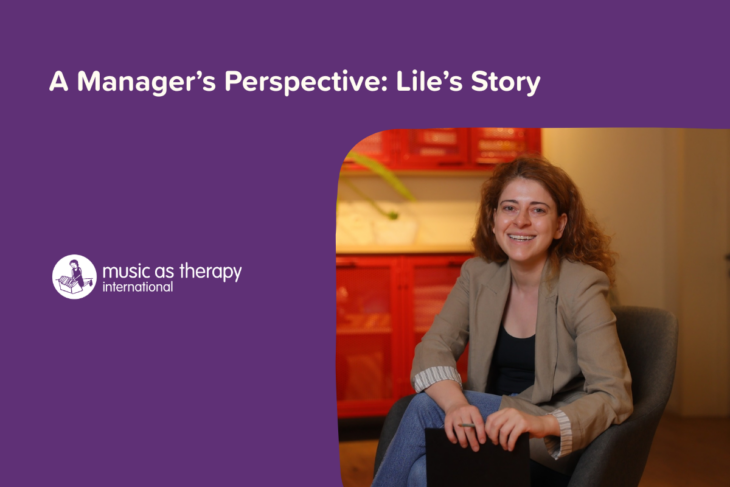
Lile Kazaishvili is a clinical neuropsychologist and Co-Founder of Open House, a multidisciplinary centre supporting children and families in Georgia. Since founding the centre eight years ago, Lile and her team have focused on building ethical, evidence-based services shaped around each child’s individual strengths and needs.
After partnering with Music as Therapy International in 2022, Open House integrated music therapy into its wider clinical model through staff training, supervision, and long-term collaboration.
Lile, thank you for taking the time to answer these questions. We are pleased to be sharing your story, reflecting on your role as a clinical neuropsychologist, centre manager, and Co-Founder of Open House. Your perspective offers valuable insight into how music therapy can be thoughtfully integrated into multidisciplinary services, and how training, supervision, and long-term partnership support high-quality, child-centred practice.
Please can you tell us a bit about your centre and your team?
Eight years ago, Open House was founded by three psychologists, one of them myself- who shared a clinical practice, strong professional values, and deep mutual trust. What began as a small initiative quickly revealed a much larger need. As the demand for services grew, so did our responsibility: to expand thoughtfully, to train new professionals, and to build a team that could meet families with competence, care, and respect.
Our first structured therapeutic model was ABA therapy, which marked an important step in systematizing our services. Over time, Open House evolved into a trusted provider of state programs, while continuing to grow clinically and ethically.
Today, we serve more than 500 children and families, each with unique diagnoses, needs, strengths, and stories. We are proud to be considered an exceptional case in the region- not because of size alone, but because of our approach. We offer a wide range of therapeutic services designed to reflect each child’s individual interests, abilities, and potential.
After eight years, our mission remains the same: to create a space where children are seen fully, families are supported genuinely, and therapy is shaped around human connection, evidence-based practice, and respect for diversity.
Can you remember why you thought music would be important to your beneficiaries (when you requested training back in 2022)?
As a neuropsychologist, I have an understanding of how the brain develops and how communication functions- particularly in children with special needs. In clinical practice, it becomes evident that when verbal language is limited or not yet accessible, there is always space for music. Music naturally increases motivation, emotional engagement, and willingness to communicate, often reaching children in ways that words cannot.
Throughout my work in child development assessment, I was repeatedly struck by a powerful observation: even simple, non-professional sounds- when they are natural, sincere, and emotionally attuned-can create a direct bridge to a child’s mind. These sounds often evoke eye contact, shared attention, and spontaneous smiles, becoming moments of genuine connection and communication.
Although I do not play a musical instrument myself, I became convinced of the importance of integrating music into therapeutic practice. This led me to seek professionals who could unite clinical sensitivity with musical expertise. As a result, we began collaborating with early intervention therapists who have a professional musical background, as well as experienced school music teachers.
Do you remember when Tako came to deliver the training to your staff? What were your impressions of this project or what did you team tell you about it?
When Tako first visited our office, it was a moment of great excitement and high expectations. She provided training for our entire staff, during which we experienced firsthand the powerful role of music in fostering connection, bonding, and team cohesion.
Tako quickly became an integral member of our team and continued to conduct individual sessions with two of our staff members, who later developed into music therapists themselves. Under her professional supervision, they progressed rapidly and grew into confident and skilled specialists.
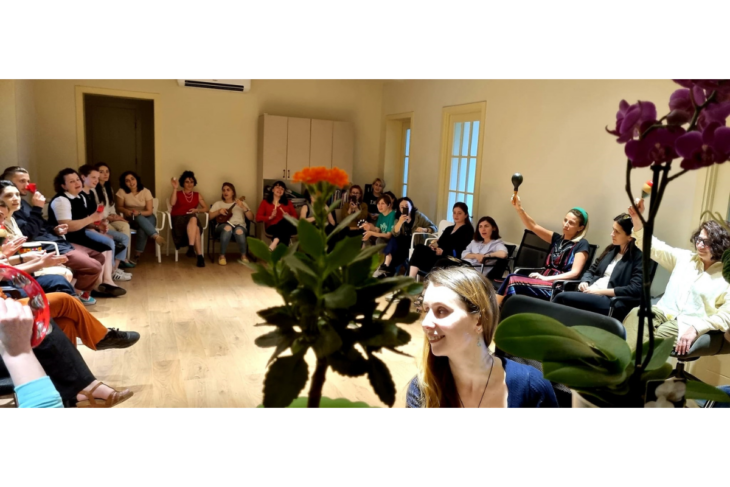
Since the training, have your team continued to use music at your Centre? Can you tell us what this looks like now? How frequently are music sessions available? Are they group or individual sessions? How many of your staff lead music sessions?
We have never discontinued music-based sessions at our Centre. Due to the consistently high demand and the strong interest shown by both children and their parents, music sessions have remained an ongoing and integral part of our services.
Currently, we offer two music sessions per week for toddlers, as well as sessions for older children. Some of these children demonstrate a strong interest in music at a more advanced level and are motivated to further develop their skills, with the potential to pursue music in a professional capacity in the future.
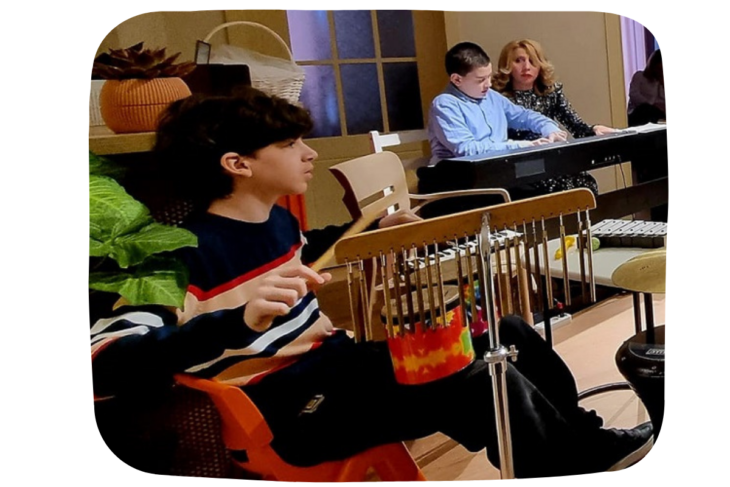
At present, we provide both individual and group music sessions. These sessions are led by one trained therapist, who delivers music-based interventions tailored to the developmental needs and interests of each child
We would love to hear about any progress your staff have told you they have seen in their service users during music sessions. Can you collect any stories from them about the positive impact music has for your beneficiaries?
I would like to share the story of Sandro, who began music therapy at our Centre at the age of four. He was diagnosed with autism spectrum disorder at the age of three and has been receiving services at Open House since that time. Alongside ABA therapy and occupational therapy, we recommended music therapy to his parents, as Sandro showed a strong interest in music and demonstrated an excellent auditory memory.
I clearly remember Sandro’s first music therapy sessions. At that time, he was highly restless, had significant difficulty sustaining attention, and used very few words for communication. However, through the structured and therapeutic use of music, gradual but consistent changes became evident. His attention span increased, his engagement with therapeutic activities improved, and he began to show greater initiative. Notably, imitation skills developed rapidly, supported by musical rhythm and repetition.
After five years of ongoing music therapy, Sandro has made remarkable progress. He is now able to play complex and lengthy classical music pieces for extended periods of time. His verbal communication has significantly improved, and his emotional regulation is much stronger, supported by meaningful and preferred musical activities that provide him with stability and enjoyment.
Sandro’s experience reflects a broader pattern we observe among many children with autism spectrum disorder. Music often becomes a safe and supportive space- a source of joy, calm, and emotional balance. Through music therapy, we consistently observe improvements in emotional regulation, as well as in social interaction and verbal communication, reinforcing music’s value as a powerful therapeutic modality for our beneficiaries.
For you as a Manager, why is training your staff important and why did you turn to a UK organisation to help you with this?
Our Centre currently offers 15 different types of therapy, with music therapy being an integral part of this multidisciplinary service model. We view music therapy as a valuable opportunity to support children’s development by building on their individual interests and strengths. Our therapeutic approach is grounded in multidisciplinary teamwork, where the child and their parents are considered essential members of the team. Together, we design individualized combinations of therapies that best meet each child’s needs.
Unfortunately, there are limited opportunities in Georgia for professional, structured training in many therapeutic disciplines, particularly in emerging or creative therapies such as music therapy. In contrast, more established fields- such as ABA therapy and speech and language therapy- offer more advanced and accessible training pathways.
For this reason, the support and collaboration we received from the UK were invaluable. Our professional relationship with Tako did not end after the initial training; instead, it has continued through ongoing communication and guidance. This partnership has allowed us to establish the same standards of continuous professional development and supervision in music therapy that we maintain in other therapeutic disciplines. Supervision remains an essential component across all our services, ensuring quality, consistency, and ethical practice.
Also, as a Manager, why is important to you to have music sessions available to the at your centre?
Music therapy aligns closely with our child-centred and strength-based philosophy. Many children demonstrate strong interests or natural abilities in music, and offering music sessions allows us to build therapeutic goals around what is meaningful and motivating for them.
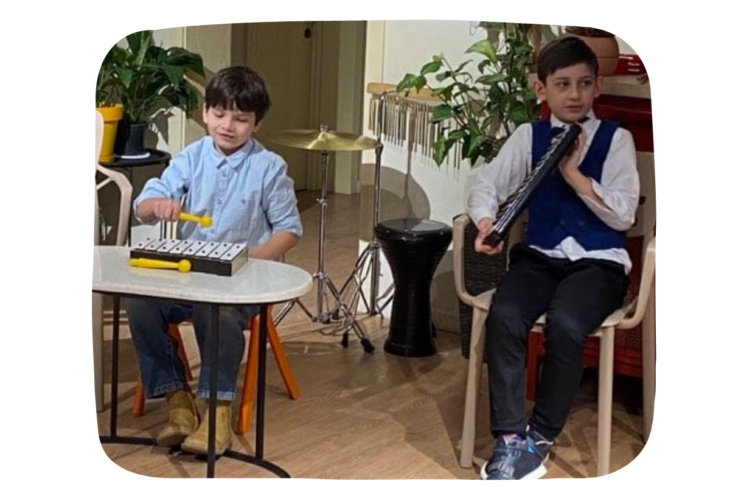
Do you have a vision for the future of music at your centre (within your services, for your team or for your beneficiaries) or for music therapy in Georgia more widely?
Our long-term goal is to establish a large para-orchestra and to train more of specialists in music therapy. While identifying and preparing the right professionals for this work is not always easy, we are actively seeking new opportunities to expand our team.
At the same time, we are committed to providing all necessary material resources to ensure that music therapy is delivered effectively and to a high professional standard. This includes access to appropriate instruments, therapeutic spaces, and structured programs that support meaningful outcomes for children.
Looking beyond our Centre, I hope to see increased research and stronger evidence demonstrating the effectiveness of music therapy. Building a solid evidence base is essential for advocacy, professional recognition, and the development of structured, evidence-informed art and music therapy services across the country. Our vision is to contribute to a future in which music therapy is widely accessible, professionally regulated, and integrated into therapeutic services throughout Georgia.
Is there anything else you would like to tell us?
Once again, I would like to express my deep gratitude to your organization. You joined and supported our services during our earliest stages, and your trust, guidance, and attention meant a great deal to us. Your support played an important role in our development and growth.
I would also like to extend my sincere thanks to everyone involved for their commitment to spreading hope, knowledge, and development across the globe. Your work continues to make a meaningful and lasting impact.