
Mia’s Story
Romania
- Caregivers
- Children
- Disability
Citiți această postare în Română
Our charity has partners working with adults with learning disabilities in the UK, Ethiopia, India, Georgia and in different places around Romania. The first organisation we connected with that was supporting adults with learning disabilities was in Cluj, where Music Therapist Clare Reynolds led an introductory training project we delivered in 1999, in response to a request from a Romanian team who wanted to develop their use of music in their Day Centre.
European Music Therapy Day gave us a chance to reconnect our Partners at the Centru de Zi “Sf. Maria” and find out more about what inspires them to keep using music all these years later.
You are celebrating your 30th anniversary this year, as is Music as Therapy International! Can you tell us a bit about your centre, your work and why music is important to your beneficiaries?
Congratulations, Music as Therapy International, on your 30th anniversary! I wish you many years ahead and all the best as you continue this beautiful work in the field of music-based interventions.
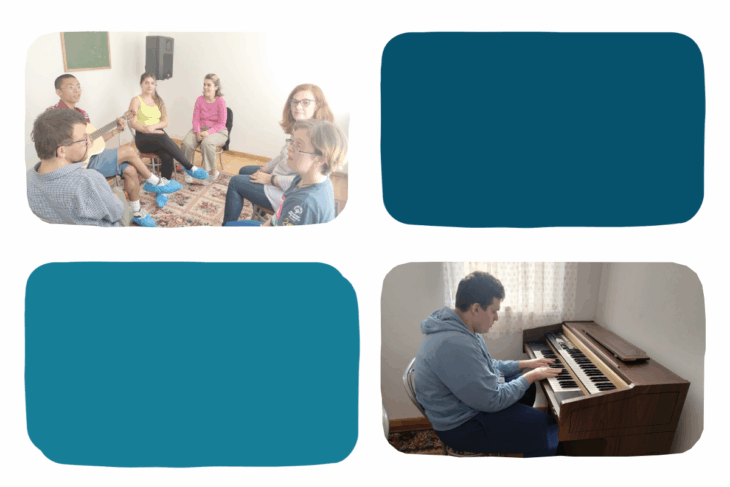
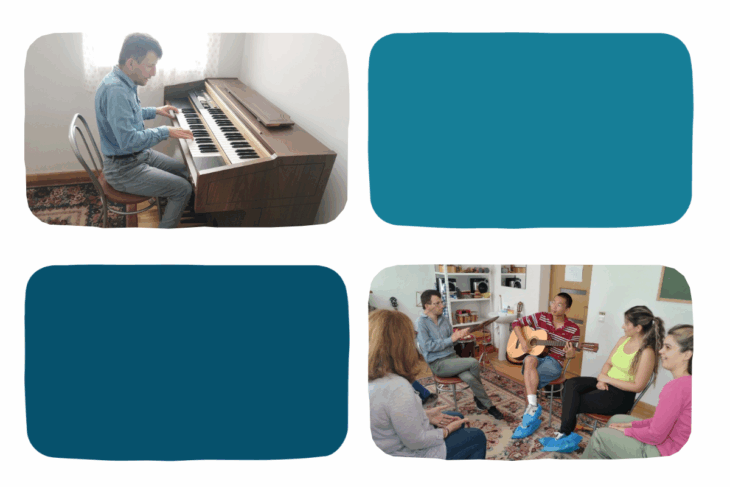
I work at the „St. Mary” Day Centre in Cluj, as a psychologist. Music as therapy is one of the important therapies that I practice in this Centre. There are 21 beneficiaries who attend the Centre and enjoy the therapies offered by our setting. They are divided into groups of 5-6, and I work with them three times a week. They look forward to these sessions because they have the opportunity to express themselves in their own way, to learn, to relax and to have fun.
Over the years, students coming to our setting for internships or in various projects have also participated in these sessions, and later they expressed their interest in accessing training and further developing in this field.
Can you tell us a little about your journey using music? When did you start? Who has inspired you?
My journey working with music, from 2000 to the present, has been wonderful, full of satisfaction and that is why I have never stopped. As I said, I use the musical instruments from Music as Therapy International in every session, and I am pleased that thanks to this form of therapeutic provision, my beneficiaries have developed on all levels: socially, emotionally, and intellectually.
A great contribution to my development came from those who inspired me in my work. The specialists from Music as Therapy International, namely Alexia Quin, Magda, Sarah, Jane and others are special, wonderful, professional people with a great desire to share their knowledge and experience.
Over the years, alongside these wonderful people, I have participated in various conferences, symposia, courses, and trainings in different cities in Romania – Cluj, Oradea, Bacău, Brașov, and Bistrița – together with other practitioners from my country. There were remarkable, memorable meetings where music enthusiasts met and shared our experiences and where we had the opportunity to learn from each other.
On 14th November 2025, the European Music Therapy Day was celebrated in Romania, and a group of impressive Romanian music therapists organised an event in your city, Cluj-Napoca. Can you tell us a little bit about the event? Who was there? What topics were discussed? What did you learn or discover? What inspired you?
I attended the European Music Therapy Day event on November 14th, which took place in Cluj. Among the participants were many students from the Cluj Music Academy and the Faculty of Psychology.
The presenters were Angelica Postu, presenting From „Muzica face Bine” to Music Therapy; Beatrice Iordache, with Intersections between Art, Psychology and Therapy – The Role of Music in Health; Simion Echim, with Integrating Music into Applied Psychology, and Maria Moldovan, with Neurologic Music Therapy Techniques Applied to the Language Area.
Of the specialists who presented and truly inspired me, Angelica Postu stood out. She spoke about the beneficial effects of music as a therapeutic intervention and the specific methods of music therapy, which offer concrete intervention modalities in clinical, educational, and preventative contexts. I was delighted to meet her and learn details about her work. Among other things, she works with patients in a psychiatric hospital in Germany, and I particularly appreciated her openness in sharing details of her work there, which is not easy. She is clearly dedicated and passionate about what she does.
It sounds like it was a fascinating event. Why did you decide to attend?
I chose to participate in this event because it was the first time I learned that the European Music Therapy Day is celebrated on the 15th of November, and because the event was taking place in Cluj. Thus, I had the opportunity to participate, learn, and discover new things from the work of others.
Since we first met, back in 1999, have you seen attitudes towards adults with learning disabilities change? Have you seen changes to how people understand the role of music therapy during this time?
Music therapy has developed significantly in Romania over the past years. There has also been a shift in people’s mindset towards this group of people. They are now regarded with much greater attention. A great many institutions are increasingly open to using music-based work – from nurseries, schools, colleges, universities, and hospitals, to medical practices – the benefits of music in people’s recovery are recognised everywhere.
This is also thanks to your dedicated involvement over so many years here in Romania. I genuinely believe that you were the ones who started this wonderful story in Romania, and I’d like to congratulate all the settings and organisations that have opened their doors and welcomed you.
Is there a particular memory / experience of using music that you return to that keeps you motivated? When times are tough, what’s the thing that keeps you going?
My memories of music are many, both from my work with the beneficiaries and from pleasant memories of you and everything I learned from you. On many occasions, I talked about you to my students, hence why many of them have chosen to go in this direction. These aspects motivate me to move forward, the enthusiasm with which my beneficiaries await each of our meetings, as well as the interest of others in music.
Do you have hopes or dreams for music therapy in Romania, particularly with respect to the role it can play for adults with learning disabilities?
I have high hopes for music therapy in Romania, because, as I said before, there are many specialists open to this type of opportunity to work with adults, and who have observed the benefits of music on their development.
Related projects
-
On-site skill-sharing: Centru de Zi ‘Sf. Maria’ (Cluj) 1999
Romania
- Children
- Adults
- Disability
- Young people