Svetlana’s Story
Romania
- Children
- Disability
Citiți această postare în Română.
Svetlana, thank you for taking the time to answer these questions. Your reflections offer a thoughtful and moving picture of what it means to work week after week alongside children with complex needs, using music as a bridge to connection and growth. We are delighted to share your story as a 2024 graduate of our Romanian Distance Learning Programme and a recipient of the Musical Instrument Fund.
Good afternoon. I am Svetlana Frunze, a caregiver using music as therapy at Asociația Steaua Călăuză, and I am pleased to share my answers to the questions below.
You completed the Distance Learning Programme. What did you learn during the course that you still practise to this day?
The Distance Learning Programme helped me understand and apply the fundamental principles of music therapy: using music as a non-verbal language, carefully observing children’s reactions, respecting each child’s individual pace, and building a relationship through music. I continue to practice: active listening, adapting instruments to meet the children’s needs, creating simple yet effective activities, and providing a safe space where every child can express themselves at their own pace.
Why did you decide to apply for new musical instruments?
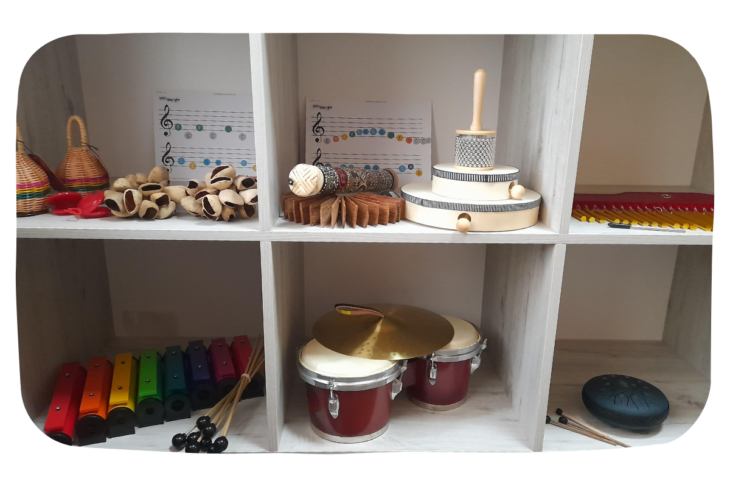
I decided to apply for new musical instruments because I work with children who require a diverse range of instruments. Our current instruments are limited and some have become worn over time; therefore, new instruments would significantly enhance the value of my work. They allow me to create more enriching activities that are better tailored to the children’s actual needs.
What does having new instruments mean to you?
For me, new instruments represent the opportunity to provide children with an engaging environment. Each new instrument opens up a window for expression, connection, development, and joy. They mean progress, quality, and the chance for these children to access musical experiences they might otherwise never have.
What do you hope to use the instruments for?
I intend to use the instruments in both individual and group sessions to support the development of coordination, focus, motor skills, emotional expression, and listening abilities. My aim is to integrate them into the routine of every session, thereby creating a diverse and effective therapeutic environment.
With whom will these instruments be used?
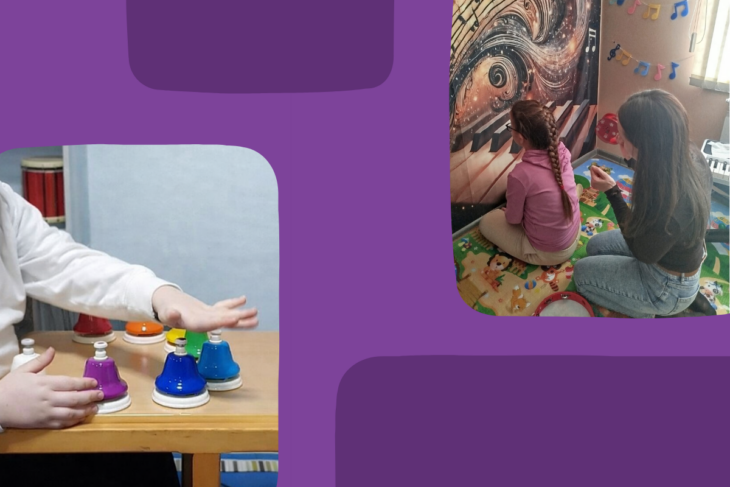
The instruments will be used with the children I work with on a weekly basis at the Centre. The beneficiaries are children aged between 3 and 12, most of whom have ASC (Autism Spectrum Condition), psycho-verbal delay, developmental delays, communication difficulties, or attention difficulties. For them, music serves as a vital support in their rehabilitation process.
How will the instruments benefit both your work and the children?
The new instruments will allow the children to explore a variety of sounds, while developing their coordination, focus, and ability to express themselves non-verbally. They will enable me to structure more effective activities, increase the children’s engagement, and provide sensory experiences tailored to each individual’s level and needs. Furthermore, these new instruments motivate the children to participate with genuine joy.
Which musical activities do you hope to try with the new instruments?
With the new instruments, I aim to introduce new activities such as rhythm games, activities for emotional regulation, for developing fine and gross motor skills, for moments of free exploration, and group activities to foster cooperation.
An example of an activity:
“The Rain” – An activity for imagination and rhythm.
I will use the rainsticks and the xylophone. I begin by creating the sound of gentle rain, inviting the children to join in. We then transition to more intense sounds, mimicking raindrops using the xylophone. The children will be encouraged to play the xylophone bars on their preferred colours. This activity develops focus, coordination, and self-expression, while also helping with emotional regulation.